
OPENING QUESTION: Please work SOLO to determine the dimensions of THIS file.
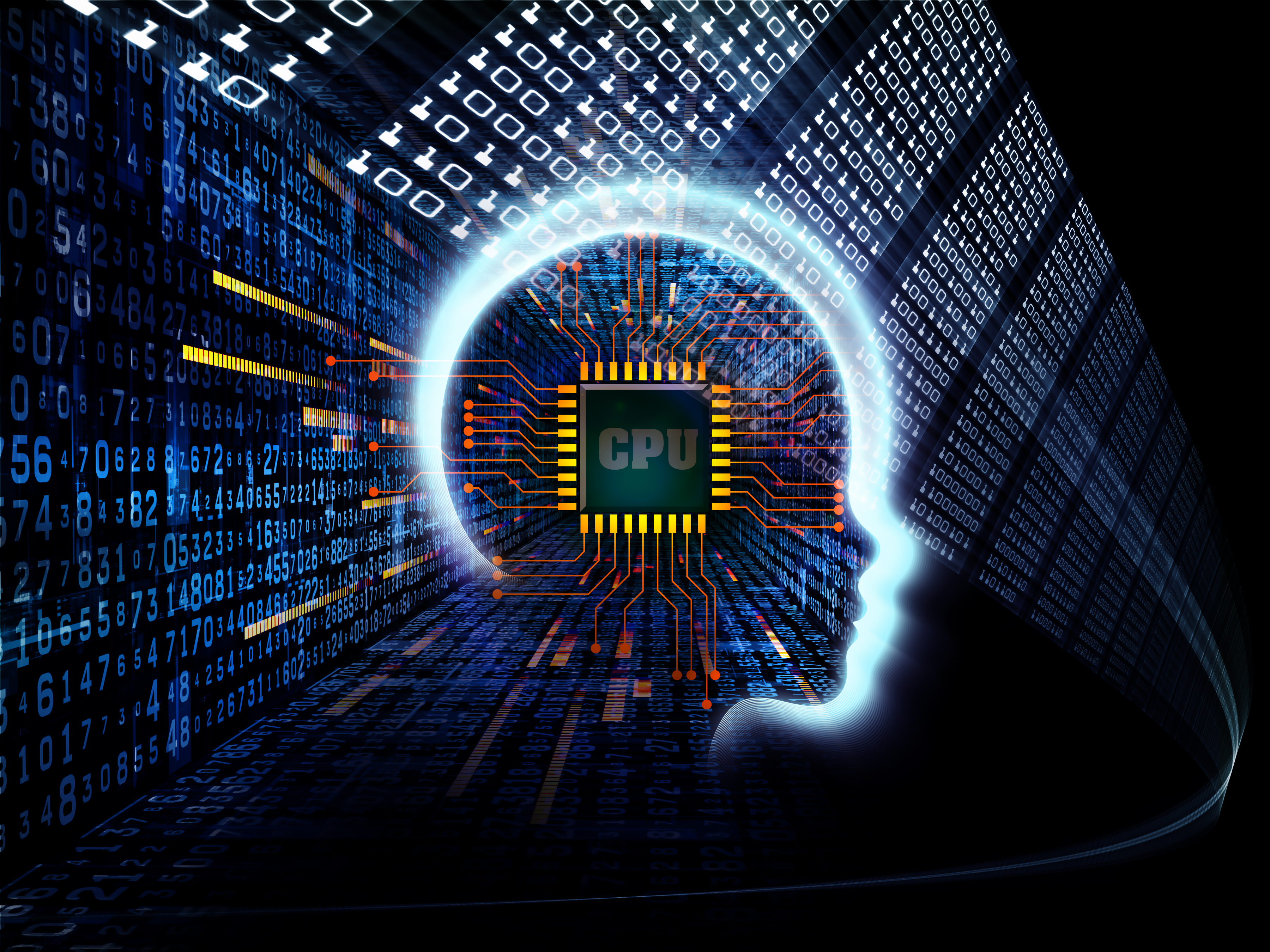
Then please compare your solution with those found by other members of your team.
Part Deux: That file is a jpg, yay or nay? If it *is* a jpg, suggest how well the compression algorithm will work with that particular image (make your best assessment)
LEARNING OBJECTIVE:
- I will be able to compare and contrast changing resolution with image compression during today's class.
CALENDAR:
WORDS FOR TODAY:
I STRONGLY URGE YOU TO START A DECK OF FLASH CARDS HERE
- innovation: "A new or improved idea, device, product, etc, or the development thereof
- prototype: "A proof of concept"
- CPU: Central Processing Unit
- Binary: 0's & 1's - Base2
- Octal: Base8
- Hexadecimal Base16 - 0,1,2,3,4,5,6,7,8,9,A,B,C,D,E,F
- Byte: one binary 'word'
- Bit: one binary 'letter' - either a 0 or 1
- Abstraction: "The difference between the user layer and the software/hardware layer"
- Compress - to decrease the number of bits used to represent a piece of information
Heuristic - a problem solving approach (algorithm) to find a satisfactory solution where finding an optimal or exact solution is impractical or impossible.
Lossless Compression - a data compression algorithm that allows the original data to be perfectly reconstructed from the compressed data.
Lossy Compression - a data compression algorithm that sacrifices some amount of the original data to decrease file size
Image - A type of data used for graphics or pictures.
metadata - is data that describes other data. For example, a digital image may include metadata that describe the size of the image, number of colors, or resolution.
Pixel - short for "picture element", the fundamental unit of a digital image, typically a tiny square or dot that contains a single point of color of a larger image.
Image - A type of data used for graphics or pictures.
metadata - is data that describes other data. For example, a digital image may include metadata that describe the size of the image, number of colors, or resolution.
WORK O' THE DAY:
Bitmapping/Imaging Project:
Some of us knocked it out of the park (YAY!)
If you didn't get it turned in, please do so ASAP (AHEM!)
Here are things to consider:
Please keep in mind: If you *ever* do work that is "Good Enough".... you'll get a grade that is "Good Enough". When in doubt, do work that you're proud of doing.
═══════════════════════════
FOR TODAY!
For many years the file compression utility was an absolute necessity (throughout the 80's and 90's and early oughts). It remained virtually unchanged throughout that time which is a strong indicator of just how well the original authors did in writing that code.
For most of that time it was a free utility and was widely shared. Oddly enough as it start waning in use the owners tried to (?) grab it back and sell it -- which was kind of odd.
Please do a wee bit of research on the history of PKzip compression, how did it work (generally speaking)
Discuss with your team then we'll discuss as a class.
═══════════════════════════
Here's an interactive sampling tool that reflects what happens with a jpg.
How does what you see that reflect lossy compression? What sort of advantages are present there? (I hope the disadvantages are obvious)
If you have photo editing software --- notice how MUCH you can change the resolution and such on a LARGE file like THIS. Try it with software on your chrome (it's good file selection processing too).

I'll DEMO with photoshop. You *might* be able to do the same thing with PIXLR.
Is data being thrown out there? How is resolution a factor? Work on answering the following with your team:
You can always make a picture smaller without loss of quality, but making a picture bigger always results in lower quality!
═══════════════════════════
As image processing and indeed creation allow for more and more life like images, we are rapidly approaching a place in our society where "Seeing" ain't necessarily "believing".
To trot out another old adage-- a picture might not be worth 1000 words anymore.
Let's read about that HERE
═══════════════════════════
Intro to our VUDU/Netflix/Amazon streaming service project
═══════════════════════════
What about "Deep Fakes"?
Let's discuss...
Now please go and find an acknowledged deep-fake... oh and let's make it a GOOD ONE... not something a hobbyist has done in their basement, I'm talking IBM, MIT best o' the best Deep Fake
═══════════════════════════